
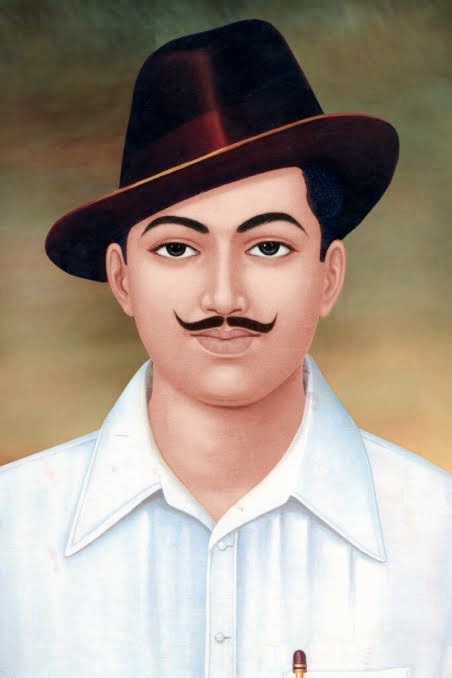
✅ Biography of Bhagat Singh | The Young Revolutionary of India
🟨 Name
Bhagat Singh
🟨 Date & Place of Birth
28 September 1907, Banga, Punjab Province, British India (now in Pakistan)
🟨 Key Role
Revolutionary Freedom Fighter
🟨 Known For
Martyrdom at a young age; inspiring youth with radical patriotism
🟦 Early Life and Inspiration
Bhagat Singh was born into a family deeply involved in India’s freedom struggle. Influenced by his patriotic father and uncles, he grew up with stories of courage and sacrifice.
At a young age, he was disturbed by the Jallianwala Bagh massacre (1919), which sowed seeds of rebellion in him. He became active in revolutionary movements while still in his teens, leaving formal education to dedicate himself fully to the freedom struggle.
🟧 Role in Revolutionary Activities
Bhagat Singh joined the Hindustan Socialist Republican Association (HSRA) and believed that armed revolution was necessary to overthrow British rule.
In 1928, to avenge the death of Lala Lajpat Rai, he and his associates plotted and executed the killing of British officer John Saunders. He later courted arrest by throwing bombs in the Central Legislative Assembly in Delhi (1929) along with Batukeshwar Dutt—ensuring no casualties, as their goal was to “make the deaf hear.”
🟩 Trial and Martyrdom
His trial became a national sensation. In jail, Bhagat Singh led a hunger strike demanding better treatment for Indian prisoners.
Despite national protests and appeals for clemency, he was sentenced to death. On 23 March 1931, at the age of just 23, Bhagat Singh, Sukhdev, and Rajguru were executed in Lahore Central Jail. They kissed the gallows, shouting “Inquilab Zindabad!” (Long live the revolution).
🟫 Ideology and Writings
Bhagat Singh was not just a fighter but also a thinker. He was influenced by socialism, atheism, and revolutionary literature.
His writings, like “Why I am an Atheist”, reveal his deep intellect and unwavering belief in justice and freedom. He rejected religious orthodoxy and sought equality, liberty, and empowerment of the masses.
🟥 Legacy
Bhagat Singh became a legend in his own lifetime. After his death, he was hailed as Shaheed-e-Azam (Great Martyr).
He continues to inspire youth with his courage, clarity of purpose, and deep patriotism. His image with a hat and mustache is iconic in Indian history.
🟦 Notable Quotes
“They may kill me, but they cannot kill my ideas.”
“If the deaf are to hear, the sound has to be very loud.”
“Revolution is an inalienable right of mankind. Freedom is an imperishable birthright of all.”
✅ Conclusion
Bhagat Singh was the voice of fearless revolution. At just 23, he gave his life for the dream of a free and just India. His sacrifice lit the fire of rebellion in millions, and his ideas continue to guide generations toward truth, courage, and justice.


